Yong Yew Kim1 : Portrait of a Teacher, Principal and
Songwriter
by Shue Tuck Wong
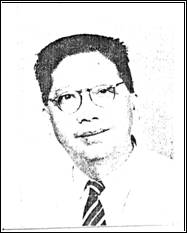
Yong Yew Kim
Yong Yew Kim served with distinction
for over half a century as teacher and principal of the Seremban Anglo-Chinese
School (ACS). He contributed significantly to the growth of ACS and the Wesley
Church, to the founding of the
Career and Songwriting
Yew Kim was born on May 23, 1900 in
Malacca, and died on July 20th, 1990 in Seremban. He was the son of Yoong Shin Sen and Chung
Chiu Ying, Chinese immigrants from “Moi Yan”, Kwantung Province,
While Yew Kim was teaching at ACS,
both his younger brothers went abroad to study in
The subjects that Yew Kim taught at
ACS were mainly mathematics (made up of algebra, geometry and trigonometry) and
bookkeeping (elementary accountancy).
His responsibility was mainly to prepare senior students to sit for the
Overseas Senior Cambridge School
Certificate Examinations, for British
Commonwealth Students. He was a
conscientious, hardworking, patient and understanding teacher. As I recall, when he taught math, he brought
to class his own repertoire of teaching aids, viz., the big wooden protractor,
the yard long bamboo ruler, a long string and a small box of white and coloured
chalk. He drew triangles,
parallelograms, rhomboids, using his bamboo ruler. When he drew a circle, he would tie the
string to a piece of chalk and ask a student to hold one end of it and press it
against the blackboard, and he would raise his arm and swing the string around
to draw the circle. He was very
meticulous and would go into great detail to explain how the various kinds of
angles--their sizes and shapes—were formed and what theorems were suitable for
solving each kind of problem. Most of
his detailed explanations were directed at the average or slower learners. Brighter students sometimes thought he was
too patient and generous with his time in explaining problems to the
class. Occasionally brighter students
might not even pay attention to his teaching, and they would start doing other
homework or read a storybook while he taught.
When he caught such students not paying attention to his teaching or his
explanations, he would pause and say, “Class, pay attention.” If the students concerned did not look up, he
would repeat it again. When they looked
up, he would smile at them and continue teaching. Rarely did he ever lose his temper or raise
his voice and scold the student who was not paying attention while he was
teaching.
In connection with Yew Kim’s
teaching, mention might be made of what Stanley Padman, former ACS Old Student
and the late Principal of Telok Anson High School,
Yew Kim in his career was more than
a math teacher. He was also a gifted
poet. He started writing poems in his
twenties and thirties. For instance, he
wrote a poem in memory of his younger brother, Yew Moyne, who was killed by the
Japanese during World War II in
Yew Kim wrote not only poems but
also numerous songs that portray Christian principles and his personal
ideals. His most well-known song was
“Our School Song”2, which he composed in 1941. The song contained three verses written to
the music of Adam Geibel’s 1904 song “March with the Heroes”. It quickly became a hit with the ACS students
and became the school’s anthem. The
words of the song stress love for others, care for others, sorrow and
worthiness of lessons learned. They were
a testimony of Yew Kim’s personal beliefs and ideals; namely, living for
justice and universal peace, truth and honesty, forming lasting friendships and
challenging “the hard right” against “the easy wrong”. Indeed, the refrain best sums up the heart of
his message:
Bright hope
of the future, Ever ‘gainst the wrong,
May we
bring thee honour In life’s battle long!
Two
other songs connected with ACS are: “The Seremban ACS Old Students’ Song”,
1949, and “Our Alma Mater Song,” 1951.
The former came about as the result of the formation of the ACS Old
Students’ Association in 1949. The Old
Students’ Association Committee felt that ACS Old Students needed a song of
their own. Yew Kim responded to their
need and penned the words of this song, while A.P. Chin of the
“Our Alma Mater Song” was originally
intended for the Old Students of the Seremban ACS. The ACS Old Students’ Association did not
adopt this song because it could also be used alike by the Old Students of all students, whether coeducational,
boys’ or girls’ schools, and also vernacular schools where English was
taught. As a result of the ACS Old
Students’ Association having its own Old Students’ Song, “Our Alma Mater Song”
then became the song of Old Students of all
schools. Yew Kim, therefore, decided to
dedicate it to all Old Students in
the hope of inspiring “a sense of loyalty and gratitude to their own Alma Mater
as well as a spirit of oneness among themselves, which will be a first step
towards a common citizenship in
The “Flag of Malaya” song followed
in 1952. Once again, Yew Kim wrote the
lyrics while choosing the tune “Lest We Forget” by G.F. Blanchard. He intentionally designed it for schools to
sing on Federation Day. The lyrics
espouse such values as pledge of loyalty, happiness to live in unity, fairness
and justice among all nations, cherishing liberty, understanding freedom and
striving for peace. On July 30, 1952,
the ACS school choir first performed the “Flag of Malaya”, and the next month
they sang it again—together with “Our School Song”—as part of a fundraiser for
the Seremban Gurney Memorial Library. (Straits
Times, 2 August, 1952, p. 5)
The “31st August 1957”
song was written in English in 1957 and was published in the ACS magazine The Silent Signpost, 1957—the Year of
Independence for Malaya—after
When the Association of Southeast
Asian Nations (ASEAN) was formed on 8th August 1967, Yew Kim decided to write
an ASEAN song for the region and dedicated it to the original five members,
viz.,
Following the rationale of the
“Peace Song”, Yew Kim wrote “Common School Song” aimed at schools outside
ASEAN. He made changes to the first line
in the first verse and the second line of the second verse to allow harmonization
with the names of the non-ASEAN countries.
The song in three verses stressed goodwill, everlasting friendship,
sharing remembrances and sorrows at home and afar. This song was translated into Bahasa
In 1941 - 1942, Yew Kim was elected
by the
When ACS reopened in 1947 during the
British Military period, Yew Kim returned as a teacher and as a staff member
under Reverend Paul H. Schmucker (the Eleventh ACS Principal, 1947-48). One serious problem they encountered was the
imminent shortage of classroom space and the overflow of numerous overage
students. To remedy the situation,
Schmucker and Yew Kim decided to set-up additional classes. They split ACS into two sections: a morning
section for regular students and an afternoon section for overage students and
those who could not enroll in the regular English schools. The afternoon section came to be known as the
Around this time the American
Methodist Mission donated some funds to help with the classroom space shortage. Yew Kim added a single storey section of ten
classrooms to the new building. However
the funds were insufficient to complete the project. Thanks to the ACS teachers, who donated ten
percent of their salary, and to additional public support and help from the
local government, Yew Kim’s vision for the new building was well on its way.
When Paul H. Schmucker left for
Yew Kim was particularly passionate
about his involvement with the activities of the Old Students’
Association. In 1949 he introduced a
special section in The Silent Signpost
dedicated to news about them. It
featured them by name, profiling their activities and any awards they achieved
after leaving ACS.
Following Reverend Ingerson’s return
to
In May 1955, Yew Kim retired from
ACS. At his retirement party, hosted by
the teaching staff, the Old Students’ and Present Students’ Associations, Mr.
Ngui Choon Jin spoke on behalf of the ACS teachers and called it a “double
occasion” since that very same day was also Yew Kim’s 55th
birthday! Just as Yew Kim finished his
dinner, he was surprised to hear from Mr. Choon Jin again. Mr. Choon Jin announced that Yew Kim was
reemployed by ACS because it needed him to shepherd the completion of the new
building.
Yew Kim finally retired in December
1955, after Mr. Choon Jin took over as the Thirteenth Principal of ACS
(1955-61).
Personality and Legacy
Yew Kim was an amiable, warm,
affectionate and compassionate gentleman.
He was rather quiet and generally private, and had a kind
disposition. He was not aggressive nor
belligerent or pushy in conversation.
Many of his colleagues and friends found him easy to get along with
socially as he was quite witty and possessed a good sense of humour!
In his behaviour, he was highly
moral and ethical. He had his own ideals
and moral code of conduct. For example,
in education, character development was more important than earning good
grades. He affirmed this on the
Principal’s Page in the school magazine, saying, “Subscribing to this view will
make the world a much happier place to live than it is at present.” (The Silent Signpost, 1952)
Besides being a regular teacher and
staff member of ACS, he was a faithful Sunday School teacher and a treasurer of
the Wesley Church. He was a devout and
highly dedicated Methodist. And he was
also an ardent believer in Norman Vincent Peale’s famous book The Power of Positive Thinking. Being an optimist, he often recognized
people’s finer qualities rather than to begrudge them. In particular, he showed great kindness and
magnanimity towards the newer and younger staff members of ACS. He encouraged their teaching forays and their
participation in intramural school sports and social events.
Yew Kim was highly intelligent and
naturally gifted, both in literary and quantitative skills. His humanistic interests were broad and
multifaceted. He had a good
understanding of English Literature and loved to read poetry. Indeed, he fine-tuned most of his mathematic
skills and literary accomplishments through years of disciplined self study and
the sheer love of learning. It is almost
certain that if given the extra opportunity to pursue a university degree, Yew
Kim would have become an outstanding scholar and perhaps even a professor.
Yew Kim was a good family man. He married his wife, Cheong Chin Kian,
through a matchmaker in “Moi Yan”,
Few others had greater affection and
aspiration for the life of the Wesley Church than Yew Kim. Upon his retirement, he spent his golden
years translating Christian hymns into Bahasa
These words demonstrate that Yew Kim
was not only a devout Christian but also a loyal patriot and an ardent believer
of multiethnic harmony in a unified one Malaysia—an ideal that Dato Najib Tun
Razak had been advocating for the one Malaysia since 2009! Through his poems, songs and translated hymns
into the Malay language, Yew Kim greatly enhanced and enriched not only the
cultural life of Seremban but also the whole social fabric of Malaysian
society.
It is interesting to note that in
Mandarin Yew Kim (You Jing) means “to
have a view or scenery”. The Chinese
character for Jing is a compound of
two words, the sun and the capital. In
the Chinese system of writing, it is represented by the sun over the
capital. When the sun is above the
capital, it provides a commanding view of everything in its vicinity. In a way, Yew Kim who served at ACS for over
half a century, now himself holds a commanding view at the very entrance of the
primary building that he diligently built.
His name Jing reflects his
multifaceted talents as portrayed in his poems, songs and translated
hymns. Indeed, his name befits his
legacy! He was truly a remarkable and
extraordinary person who transformed ACS from a beacon, with its “shades of
gleaming light”, into a star shining bright over the Sungei Ujong Landscape of
Seremban!
Our School
Song
ACS we thank thee: Thou, O beacon bright
That amidst
the darkness sheds its gleaming light!
Bountiful
the knowledge Thou hast to bestow,
Greatest of
thy lessons: Love for others show!
Refrain
Bright hope of the future, Ever
‘gainst the wrong,
May we bring thee honour In life’s
battle long!
On they
grounds in cheerful study, happy play
We, all
nations’ children, Meet from day to day!
Form we
lasting friendships That do bid us all
Share each
other’s sorrow, Heed each other’s call!
Refrain
When at
last we leave thee, O’er the world to roam,
E’er shall
we remember Thee, our second home!
Well imbued
thy precepts, Wheresoe’er we be,
We’ll
reflect they teachings, Worthy be of thee!
Refrain
Acknowledgements
The author is much indebted to Dr.
Yoong Yee Phiow, Yoong Yee Loke and Yoong Yee Chit for their assistance in
providing family history information. He
is also thankful to former ACS students and friends who have given information
on Yew Kim’s songs and translated hymns.
They include: S.T. Peter Lim, Thong Kok Chaw, Heng Pooi Lim, Kenneth
Kulasingham and Han Chiang Lim. In
preparing this paper, earlier drafts were reviewed by Sophia Wong and Christina
Wong. Any errors are the responsibility
of the author.